What a Club Residency Really Means: Inside Beirut's DJ Scene and How It Shapes a Set
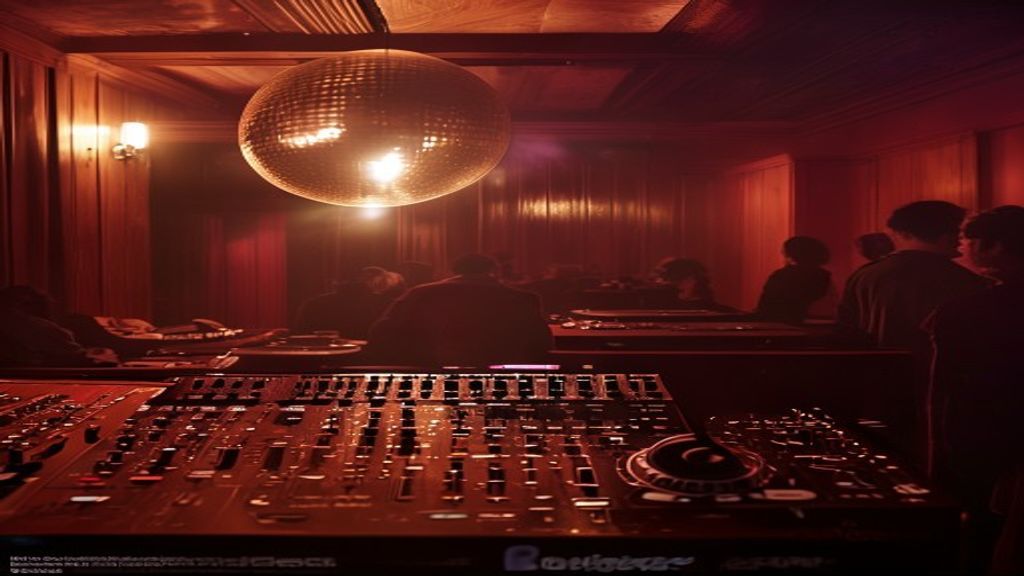
Ask most people what a "resident DJ" is and you'll get a shrug. It sounds like a job title from a hotel brochure. In practice, a residency is one of the hardest things a DJ can hold onto, and one of the most telling signs of whether someone actually knows how to run a room — not just play music in it.
Beirut has been producing DJs with that kind of discipline for decades. The city's club culture has always demanded more than a good playlist. Understanding what a residency actually asks of a DJ explains a lot about why some sets feel effortless and others feel like guesswork.
What Does a Resident DJ Actually Do?
A resident isn't a guest booked for one night. A resident is the person a venue trusts to open the room, read it as it fills, and carry it through to close — week after week, for the same regulars, the same staff, the same sound system.
That repetition is the whole point. A residency forces a DJ to actually learn a room — how the low end behaves near the bar, where the crowd bottlenecks on the floor, what time locals arrive versus tourists, how the energy shifts on a Thursday compared to a Saturday. None of that shows up on a rider. You only learn it by being there, over and over, and adjusting.
A residency typically involves:
- Programming the whole night, not just a peak-time slot — meaning warm-up, build, peak, and wind-down all fall on one person
- Reading a live crowd in real time and rebuilding a set on the fly when the room doesn't respond the way it did last week
- Managing the technical relationship with a venue's Pioneer CDJs, mixer, and monitor setup, often without a soundcheck
- Being consistent — showing up with the same professionalism whether the room is packed or half full
- Representing the venue's identity, which means understanding what that club is supposed to sound like, not just what the DJ personally wants to play
That last point is where a lot of DJs struggle. A resident isn't playing for themselves. They're playing for a specific room's specific crowd, week after week, and building trust with both.
How Beirut's Club Scene Shaped a Career
Beirut has long had a reputation as one of the Middle East's most musically serious cities — a place where nightlife culture never fully paused, even through the country's hardest years. That resilience produced DJs who had to be genuinely versatile, because a Beirut crowd on any given night might expect deep house, 90s classics, Arabic pop, and disco, sometimes in the same set.
Tony Schwery, a Lebanese DJ and producer born in Beirut, built his foundation in exactly that environment before expanding across the Middle East and Europe over more than 20 years. That grounding shows up in how he approaches every booking now, whether it's a club night in Doha or a wedding reception in Dubai. Deep genre range across the 70s, 80s, and 90s isn't a specialty he added later — it's where he started.
That's the real value of a residency background. It teaches a DJ to move between eras and styles without losing the room, because a resident doesn't get to blame the crowd for a bad night. The job is to fix it, live, with the tools in front of you — CDJs, Rekordbock or Serato, and twenty years of catalog in your head.
Why This Matters If You're Booking, Not DJing
You might be planning a private party, not opening a club. So why does any of this matter to you?
Because the same instincts a residency builds are exactly what you want at your event. A DJ who's held a residency has already done the hard work of learning to read a room under pressure. That's the person who notices your guests aren't dancing yet and adjusts the set instead of pushing forward with what was "planned." It's the difference between a DJ who plays music and one who runs your night.
What to Ask a DJ Before Booking
If you're vetting entertainment for a corporate event, private party, or wedding anywhere from Doha to Dubai to Beirut, a few questions separate someone with real room experience from someone who just has good gear:
- Have you held a residency, and where? Ongoing club experience tends to translate directly into confident live reading of a crowd.
- What genres and eras can you cover if the room shifts? A wedding especially can swing from Arabic classics to 90s R&B to current pop in the same hour.
- What's your setup — CDJs, controller, or vinyl — and do you bring backups? Technical reliability matters more at a one-off event than almost anything else. 4** Can you adjust in real time if the crowd isn't responding? This is the residency instinct in action, and it's the single biggest predictor of a good night.
Booking Across the Region
Whether it's a club night, a private party, a yacht event, or a wedding reception, the same principle holds: experience reading a room live is worth more than any playlist. That's what years behind the decks in Beirut, and two decades of bookings across the Middle East and Europe, actually buy you.
Tony Schwery is based in Doha, Qatar, and available for bookings across Qatar, the UAE, Lebanon, and the wider Gulf — private parties, weddings, corporate events, club nights, and collaborations. If you're planning an event and want a DJ who can genuinely read the room instead of just running through a set list, get in touch to talk dates and details.