Under the Roman Columns: What Baalbek's Festival Legacy Teaches About Booking an Outdoor Event in Lebanon
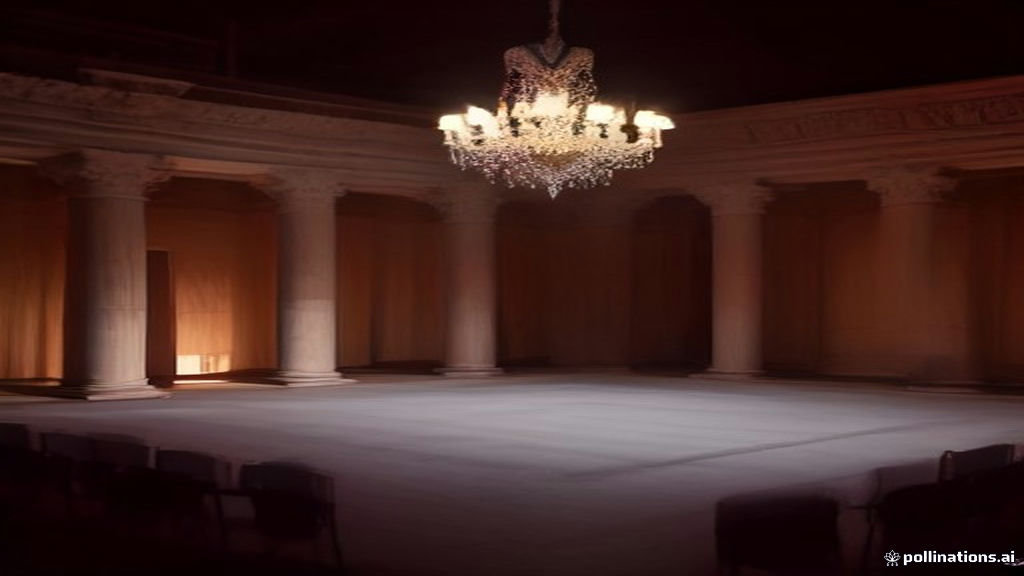
Every summer, long before any of us were born into this business, people hauled sound equipment, lighting rigs, and stage decking into the ruins of a Roman temple complex in the Bekaa Valley and tried to make music work against three thousand years of stone. The Baalbek International Festival has done this for decades, turning one of Lebanon's most extraordinary heritage sites into a stage for singers, orchestras, and performers from across the world. It is, in a very real sense, the original Lebanese outdoor event — and it has been quietly teaching event planners and DJs the same lessons ever since.
You don't need to be producing a festival at a UNESCO site to learn from it. Whether you're planning a wedding tent in Faqra, a rooftop set in Beirut, or a private party anywhere between Batroun and the Chouf, the challenges Baalbek's organizers solve every year are the same ones that decide whether your own outdoor event sounds incredible or falls flat.
Why Ancient Stone Is a Brutal Acoustic Test
Stone doesn't absorb sound. It reflects it, scatters it, and sends it bouncing back at you a half-second late. A venue built from massive limestone columns and open sky behaves nothing like a club room with carpet, drapes, and a low ceiling designed to control reverb.
This is exactly the problem Lebanon's outdoor venues present, just at a smaller scale: a stone courtyard in a mountain village, a marble-floored ballroom terrace, a beach club with hard surfaces on every side. Sound behaves differently outdoors, and a DJ who only knows how to set up in a sealed room will fight the room all night without understanding why.
A few things change outdoors that matter for your event:
- Bass disperses faster and needs more power to carry the same distance.
- Reflective surfaces can create echo or doubling if speakers aren't angled correctly.
- Wind and open air pull high frequencies away from the dance floor.
- Neighboring structures or hillsides can bounce sound back unpredictably.
None of this is solved by turning the volume up. It's solved by knowing the venue, testing it, and adjusting the sound system's placement and tuning before a single guest arrives.
The Logistics Nobody Sees From the Dance Floor
A festival the scale of Baalbek runs on permits, power planning, security coordination, and heritage-site restrictions that most guests never think about. Historic venues come with rules: where cables can run, how much weight a surface can hold, what hours sound is permitted, how equipment gets in and out without touching protected structures.
Lebanon has no shortage of beautiful but logistically demanding venues — old souks, mountain estates, seaside ruins, converted heritage buildings in Beirut. If you're planning an event at one of them, the questions worth asking your vendors early are:
- Is there reliable grid power on site, or does the event depend on generators?
- What are the noise curfews, and are they enforced by the venue or by local authorities?
- Can heavy equipment — speaker stacks, lighting rigs, DJ booths — physically access the space without damaging it?
- Is there a backup plan if weather, power, or access changes last minute?
- Who is coordinating timing between the DJ, caterers, photographers, and venue staff on the night itself?
This is event management work, not just music. A DJ who has played historic and difficult venues across Lebanon and the Gulf will already have answers to most of these questions before you ask.
Programming for a Space With History
There's something about playing in a venue with real age and weight to it that changes how a set gets built. You don't open with the hardest track in the box. You let the room breathe first, the way Baalbek's own programming has always paired weight and restraint with moments of real power.
For an outdoor Lebanese event — a wedding under the stars in Faqra, a private party on a terrace in Beirut — the same instinct applies. Start the night with warmth: classic Arabic songs, familiar 80s and 90s tracks, music that lets people arrive, eat, and settle in before the energy climbs. Save the peak-time records for when the floor is actually full and ready for them. A historic or open-air setting rewards a DJ who reads the room rather than one running a fixed playlist regardless of what's actually happening in front of them.
It's also where blending tradition and modern sound matters most. A space with this much history responds well to music with its own weight behind it — golden-age Arabic vocals layered into a house groove, a tarab classic that closes out the night instead of opening it, a 90s record that still lands because it was built to last. That's not nostalgia for its own sake. It's knowing what a room — ancient or brand new — actually needs to feel complete.
What This Means If You're Planning Your Own Event
You don't need a Roman temple to apply these lessons. Any outdoor venue in Lebanon — a garden in the Metn, a coastal terrace in Batroun, a mountain estate in Faqra — presents its own version of the same puzzle: power, acoustics, access, and timing, all working together or all working against each other.
The planners who get it right are the ones who bring their DJ into the conversation early, not two days before the event. Ask what sound system the venue actually needs, not just what sounds impressive on paper. Ask how the set will adapt if dinner runs long or the weather shifts. A DJ with real experience across Lebanon's outdoor venues will have already thought through most of it.
Booking for Lebanon's Outdoor Event Season
Lebanon's open-air calendar runs long — spring through autumn, with mountain towns like Faqra adding a winter season of their own. Whatever the venue, the fundamentals stay the same: the right sound for the space, a set that reads the room, and a plan that holds up when logistics get complicated.
I play weddings, private parties, and club nights across Beirut, Faqra, and Mar Mikhael, and I travel regularly for bookings across Doha, Dubai, and the wider Gulf. If you're planning an outdoor event anywhere in Lebanon and want a DJ who already understands what these venues demand, get in touch and let's talk through your date.