The Camelot Wheel Explained: How Harmonic Mixing Keeps a Dubai Dance Floor Moving
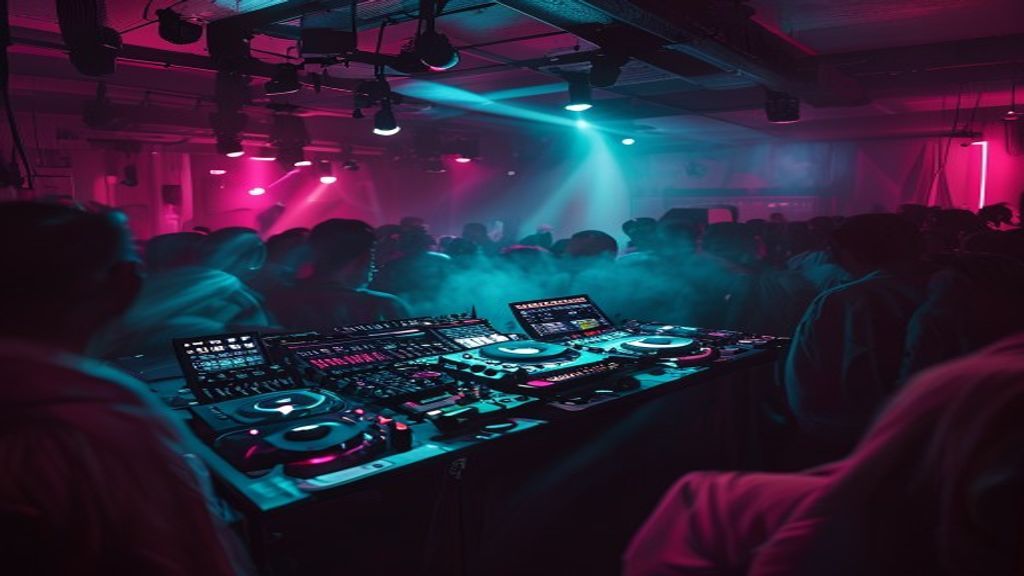
Ask most guests why a set felt seamless and they won't have an answer. They just know the energy never dipped, the transitions never jarred, and somehow every track felt like it belonged next to the one before it. Nine times out of ten, that's harmonic mixing at work — and it's one of the least talked-about, most important skills a DJ brings to a corporate event in Dubai or a private party in Doha.
What is the Camelot wheel?
The Camelot wheel is a system that maps musical keys onto a color-coded circle, originally developed to help DJs figure out which tracks are harmonically compatible without needing formal music theory. Every track has a musical key — the tonal center it's built around — and the wheel groups keys that sound good together into neighboring positions.
In practice, it works like this:
- Tracks in the same key mix cleanly, every time.
- Tracks one position away on the wheel (clockwise or counter-clockwise) share enough harmonic DNA to blend without clashing.
- Tracks directly across the wheel are relative major/minor pairs — same notes, different mood, and often a powerful way to shift energy without losing the room.
Software like Rekordbox and Serato will tag a track's key automatically, and most DJs cross-reference that against BPM before a track ever gets played live. It sounds technical, and it is — but the goal is simple. Get the harmony right and the energy curve of the night takes care of itself.
Why this matters more at a corporate event than a club night
In a club, if a transition is slightly rough, the crowd is often too deep into the night to notice. A corporate event in Dubai is a different animal. The room is smaller, the audience is more attentive, and the DJ is frequently playing during dinner, an awards segment, or a networking hour before the dance floor even opens. There's nowhere to hide a clumsy mix.
This is where harmonic mixing earns its keep. A set built on key-compatible transitions feels intentional even at low volume, during conversation, or under a room's house PA rather than a club rig. It's the difference between background music that sounds professional and background music that sounds like a playlist on shuffle.
For anyone booking entertainment for a gala, product launch, or company anniversary in Dubai or Abu Dhabi, this is worth asking about directly. A DJ who can talk you through how they build a set — not just what genres they play — is signaling real craft.
Reading the room still comes first
None of this replaces judgment. The Camelot wheel is a tool, not a rulebook. A skilled DJ will break key-matching in a heartbeat if the room needs a jolt of energy — a well-placed classic from the 80s or 90s doesn't wait for the perfect harmonic slot, it just needs the right moment. Key compatibility is what makes the technical side invisible so that reading the crowd can stay the priority.
That's really the split in this job: half technical preparation, half live instinct. You prepare the library so thoroughly — keys tagged, BPMs checked, energy levels sorted — that when you're standing behind the CDJs watching two hundred people decide whether to stay seated or get up, you're free to make the call in real time instead of scrambling through folders.
Building a library that actually supports this
Harmonic mixing only works if the groundwork is done well before the event. That means:
- Tagging every track's key and BPM consistently, using the same software across your whole library so nothing gets missed.
- Organizing by energy, not just genre — a folder structure that separates a warm-up 80s set from a peak-time 90s house run makes decision-making faster live.
- Curating for the room, not just the region — a Beirut wedding reception and a Dubai product launch draw from very different corners of the same library.
- Auditing regularly — key detection software isn't flawless, and a manual pass catches mistakes before they show up mid-set.
For DJs building or refreshing a library from scratch, sourcing clean, well-tagged, DJ-ready tracks saves hours of prep work later. Sites like Top DJ Crates offer curated WAV packs specifically built for this kind of workflow, which is useful when you're trying to fill gaps without spending a weekend re-tagging files by hand.
What this looks like across a Gulf event calendar
The technique doesn't change from city to city, but the application does:
- Dubai and Abu Dhabi corporate events often need long stretches of harmonically smooth background music before a shorter, higher-energy close-out set once formalities wrap.
- Doha private parties and yacht events tend to want a more continuous energy climb from arrival through the night, which rewards careful key planning even more.
- Beirut receptions frequently blend Arabic and Western tracks in the same set, and harmonic compatibility across that mix takes real ear training, not just software tags.
- Riyadh, Jeddah, and the wider Saudi market, where live entertainment options have expanded significantly in recent years, are seeing more demand for polished, professional DJ sets at both corporate and private functions.
What to ask before booking
If you're planning a corporate event, wedding, or private party anywhere in the Gulf, a few questions separate a DJ who treats this as a craft from one who's just pressing play on a playlist:
- How do you plan transitions between different sections of the night?
- Do you build sets in advance or read the room and adjust live?
- How do you handle a mixed audience with very different music tastes?
- What software do you use to organize your library, and how do you keep it current?
The answers won't mean much to most guests. But they tell you everything about whether the night will feel effortless or just adequate.
I've spent over twenty years building sets this way — across genres, across decades, and across the Gulf and Levant. If you're planning a corporate event in Dubai, a wedding in Beirut, or a private party in Doha, I'd be glad to talk through what the night needs. I'm based in Doha and available for bookings across Qatar, the UAE, Lebanon, and beyond — get in touch and let's build something your guests won't forget, even if they never notice why it worked.