Planning an Outdoor Event in Qatar's Summer Heat: What Actually Works
Every year around this time I get the same message from a client: "We loved the photos of that rooftop wedding in Dubai, can we do the same thing in Doha, in August?" I understand the appeal. Open sky, string lights, a breeze off the Corniche. The photos do look beautiful. But by late July, Doha routinely sits well above 40°C during the day, and even the evenings don't cool down the way people expect. If you're planning anything outdoors in Qatar, the UAE, or anywhere in the Gulf between June and September, the heat isn't a detail. It's the thing your whole event plan has to be built around.
Why summer events in the Gulf need a different playbook
A wedding or corporate party in London or Beirut in July is a different animal from one in Doha or Dubai. In the Levant, an outdoor evening in summer is often the most comfortable option. In the Gulf, it's the opposite. Humidity off the coast makes the heat feel heavier, and it doesn't really break until after 9 or 10pm most nights in peak summer.
That doesn't mean outdoor events are off the table. It means the plan needs to account for:
- When guests are actually outside — arrival, photos, and any outdoor segment need a tight window
- Where the equipment lives — sound systems, lighting rigs, and DJ gear don't love heat and humidity any more than your guests do
- What happens if the weather doesn't cooperate — a backup plan isn't optional, it's part of the booking
Indoor, outdoor, or both?
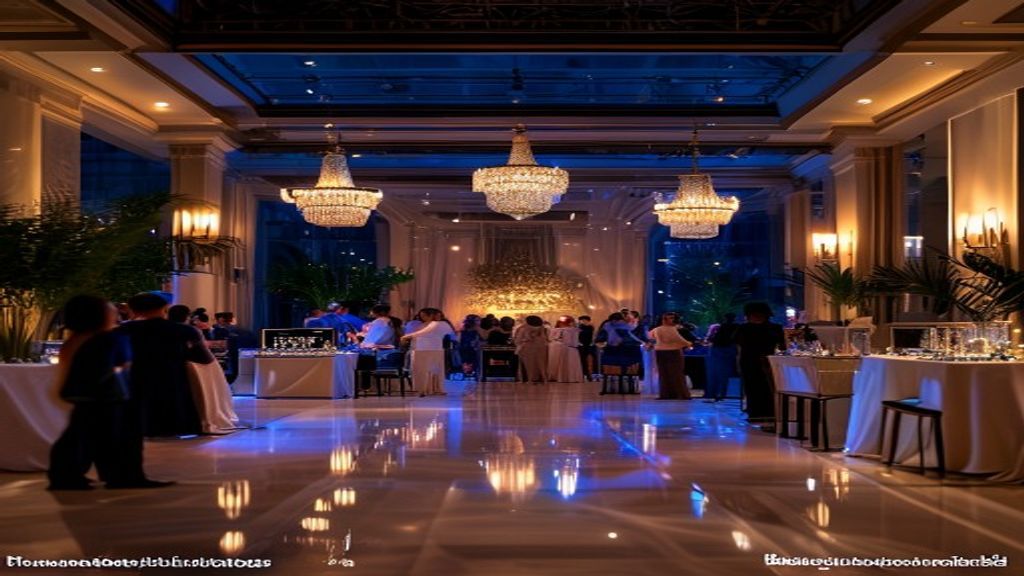
Most of the best summer events I've played in Doha and Dubai use a hybrid structure. Guests arrive and take photos outdoors in the early evening, when the light is good and the heat has started to drop slightly. Then the reception, dinner, and dance floor move indoors, into a ballroom or covered terrace with proper air conditioning.
This matters more for the DJ setup than people usually think. A dance floor needs consistent temperature to hold energy. Guests won't stay on a hot floor no matter how good the set is, and a laptop or CDJ running in direct sun or high humidity is a real risk to the whole show, not just a comfort issue. If your venue is offering a fully outdoor reception in August, ask hard questions about shade, misting, and cooling before you commit.
Questions worth asking your venue
- What's the actual plan if it's still 38°C at 9pm — not "usually it cools down," but a concrete backup
- Is there covered, air-conditioned space the DJ and sound equipment can be set up in, even if the guest area is partly outdoors
- Where does power come from, and is it stable enough for a full sound and lighting rig running for six-plus hours
- How exposed is the dance floor to wind — outdoor sound carries differently, and gusts can be brutal on speaker placement and even lighting trusses
What this means for sound, lighting, and DJ gear
I run Pioneer CDJs and Rekordbox for most bookings, and both are built for club and event use, not for sitting in direct Gulf sun for hours. Heat affects gear in ways people don't expect — screens get harder to read, laptops throttle performance, and cabling left in the sun all day becomes brittle. Any DJ or production company working outdoor events here should already have a plan for shading and cooling the booth itself, not just the guest area.
The same goes for lighting and visuals. If you're bringing in live VJ visuals for a corporate launch or a wedding reception, projection and screen visibility both suffer badly in bright, hazy Gulf evenings. That's another reason the indoor pivot works so well — visuals actually land the way they're supposed to once the sun is down and the room is dark.
Building a realistic timeline
A lot of summer event problems in Qatar and the UAE come down to timing, not temperature. I've seen run-of-show timelines built around a Levantine or European summer schedule, then applied here without adjustment. It doesn't hold up.
A timeline that tends to work well for a Gulf summer wedding or corporate evening:
- Guest arrival after sunset, not before — this alone solves half the heat problem
- Any outdoor cocktail hour capped at 45 minutes to an hour, with shaded seating and cold drinks stationed, not just offered
- Full move indoors for dinner, speeches, and the dance floor
- If there's an outdoor after-party element, plan it for late — closer to midnight, when temperatures have actually dropped
This is where working with people who plan events in this region regularly pays off. A vendor used to European timelines will build a beautiful run-of-show that simply doesn't survive contact with a Doha summer. One who's done it here before will build in the buffers automatically.
Ramadan, shoulder seasons, and the rest of the calendar
Summer heat is one seasonal factor in the Gulf, but it's not the only one. Ramadan shifts the entire event calendar too — evening timings move later, and corporate and private events often shrink in scale or move entirely to post-Iftar slots. If you're planning a wedding or corporate event anywhere from Doha to Dubai to Riyadh, it's worth mapping your date against both the heat and the religious calendar before you lock a venue.
Booking for the season, not against it
The events I enjoy most in summer aren't the ones fighting the climate — they're the ones built around it. A well-timed indoor reception with a strong sound system and a set built for the room beats an outdoor spectacle that has everyone sweating through the first dance.
I'm based in Doha and play private parties, weddings, corporate events, and yacht parties across Qatar, the UAE, and the wider Gulf — including summer dates, when the plan is right. If you're building a run-of-show for a Doha, Dubai, or Abu Dhabi event this season and want a second opinion on timing before you finalize anything, get in touch. Getting the schedule right before the music starts is half the job.