Inside Sensual Ibiza: The Chillout Label Behind a Lebanese DJ's Sunset Sound
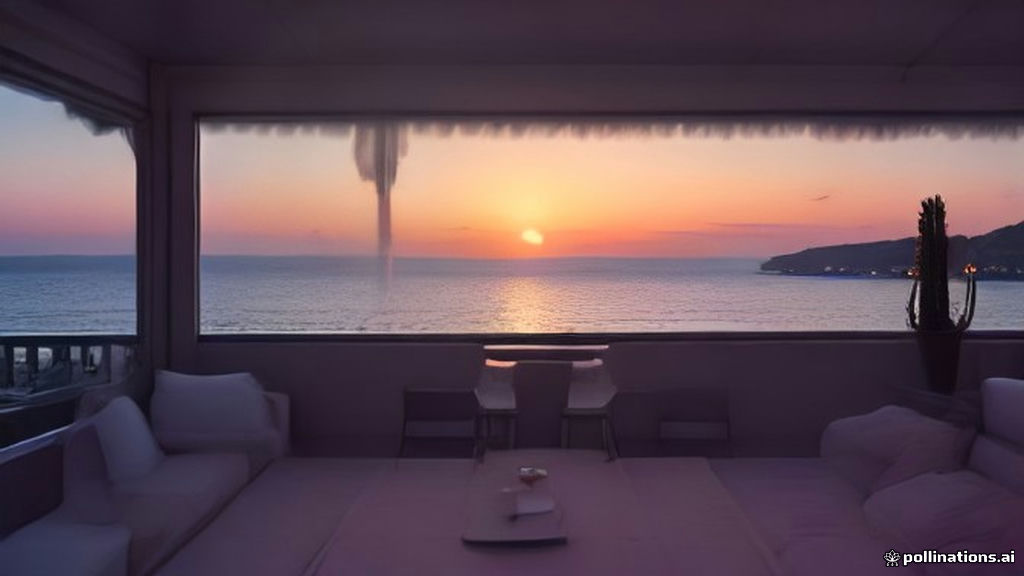
Ask most people what "chillout music" means and you'll get a vague answer — something about beach bars, candles, maybe a Buddha statue on a shelf. Ask a DJ who's actually released on a Balearic label what it means, and you get a much more specific history. One with a place, a sound, and a reason it still works on a rooftop in Beirut or Doha tonight.
Tony Schwery has released music on Inkognito Records, Blackhole Records, and Sensual Ibiza — a label built squarely inside that Balearic chillout lineage. It's worth unpacking what that lineage actually is, because it explains a lot about how a good sunset set gets built, and why it still fills a very specific role at a wedding, a rooftop opening, or a private event anywhere from Mar Mikhael to The Pearl.
Where the Balearic sound actually came from
The term "Balearic" traces back to Ibiza in the late 1970s and 1980s, where bar and club DJs played an eclectic mix of records that had nothing in common on paper — Italo disco, early house, soft rock, Mediterranean guitar, even film scores — but shared a mood. The genre didn't matter. The feeling did. That approach eventually gave the island's sunset culture its signature sound, with spots like Café del Mar becoming internationally known for pairing a slow, horizon-facing set with the exact moment the sun went down.
By the 1990s, that mood had a name — chillout — and a commercial afterlife in compilation CDs that sold in the millions worldwide. Labels built entire catalogs around it: lounge-friendly, downtempo, built for listening as much as dancing. Sensual Ibiza sits in that tradition — a label defined less by BPM and more by atmosphere, built for the hour when a party shifts from loud to warm.
Why this matters for your event, not just your playlist
Here's the part that gets missed when people think "chillout" is just background music: a good Balearic or lounge set is programmed with as much intention as a peak-time club set. It still needs an energy curve. It still needs transitions that make sense. The difference is the curve is flatter and the goal isn't to peak — it's to hold a mood without letting it go flat or saccharine.
That's exactly the skill a DJ needs for:
- Cocktail hours and wedding arrivals, where guests are talking, not dancing, and the music needs to support conversation, not compete with it.
- Rooftop and terrace bookings in Beirut, Doha, or Dubai, where a sunset is literally part of the event and the music needs to match it beat for beat, hour for hour.
- Dinner sets at private parties, where the request is almost always some version of "something nice, not too loud" — which is a much harder brief than it sounds.
- After-dinner wind-downs, bridging the gap between a formal dinner and an open dance floor later in the night.
A DJ who only knows how to build energy will struggle here. A DJ who's spent years on the other end of the spectrum — tracking down the right Balearic cut, the right instrumental, the right half-tempo edit — reads this part of the night completely differently.
Building a chillout set: what actually goes into it
A few things separate a genuinely good lounge or sunset set from a generic "chill vibes" playlist:
- Key and tempo still matter. Even at low BPM, mismatched keys create friction a dancing crowd won't notice but a seated one absolutely will, because there's nowhere for the ear to hide.
- Vocals need space. Chillout tracks often lean on a vocal hook or a spoken sample. Crowding two vocal-heavy tracks back to back is the fastest way to muddy a set that's supposed to feel effortless.
- The set should breathe with the room. As a terrace fills up or dinner service slows down, the DJ should be reading that in real time — not running a fixed playlist top to bottom.
- It still needs a destination. Even a two-hour chillout set should be going somewhere — usually toward a point where it can either close the night gently or hand off cleanly into a higher-energy set later on.
For DJs building out this part of their library, sourcing clean, well-mastered chillout and lounge material is its own quiet discipline — a lot of what gets sold as "chillout" online is thin, loopy, and doesn't hold up over an hour. Curated, DJ-ready packs from a source like topdjcrates.com can save a lot of digging when you're trying to build a set that holds together rather than just filling time.
From Café del Mar to Mar Mikhael
What's interesting is how portable this mood turns out to be. The original Balearic sets were built around one very specific sunset, on one very specific island. But the format — eclectic, warm, unhurried, built around a moment rather than a genre — travels. A rooftop in Mar Mikhael at golden hour, a terrace in Doha overlooking the Corniche, a hotel pool deck in Dubai before an evening event — the location changes, but the job is the same: hold the room, match the light, and know exactly when to shift gears.
That's the real value of a DJ who's spent 25 years across genres rather than specializing in one. Playing a wedding cocktail hour well requires a completely different vocabulary than closing out a club night, and very few DJs are equally fluent in both. It's the same reason a set that opens with Balearic guitar can, two hours later, be building toward 70s disco, 90s house, or whatever the room is actually asking for by midnight.
Booking the right sound for the right hour
If you're planning a wedding, a rooftop opening, or a private event anywhere in Beirut, Faqra, or Mar Mikhael, or across Doha, Dubai, Abu Dhabi, Riyadh, or Jeddah, the conversation worth having with your DJ isn't just "what genre do you play." It's whether they can actually program the quiet hours as well as the loud ones.
Tony Schwery brings 25+ years of exactly that range — from the Balearic and lounge sensibility behind his Sensual Ibiza release to the club-ready sets that have played premier venues across the Middle East and Europe. Get in touch to talk through your event's hours, your venue, and the sound that should carry each one — in Lebanon, in Doha, or wherever your guests are gathering.